What Is Industrial Attachment in Ghana?
What is industrial attachment in Ghana? Learn its meaning, duration, requirements, benefits, report format, and how it differs from internship for students.


Industrial attachment in Ghana is a structured, supervised practical training programme that places students in real workplaces to gain hands-on experience related to their course of study before graduation.
It is commonly undertaken by students in universities, technical universities, and TVET institutions, and it serves as a bridge between classroom theory and real-world professional practice.
In many Ghanaian institutions, industrial attachment is a mandatory academic requirement, especially for programmes that emphasize practical and technical skills.
⚡ Industrial Training Tool for Students 🔥
Use our free AI powered tools to simplify your Industrial Training.
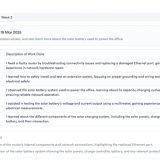
👉 IT / SIWES Logbook Generator — Create weekly logbook entries in seconds.
https://logbook.monoed.africa
What Does Industrial Attachment Mean in Ghana?
In simple terms, industrial attachment means:
A period where a student temporarily works in an organization to acquire practical skills, professional work ethics, and industry exposure related to their field of study.
Industrial attachment is sometimes called:
- Internship
- Job attachment
- Industrial training
While the names are often used interchangeably, the core purpose remains the same: preparing students for the world of work.
Is Industrial Attachment Mandatory in Ghana?
Yes, in many institutions.
Industrial attachment is mandatory for:
- Technical and Vocational Education and Training (TVET) students
- Higher National Diploma (HND) students
- Bachelor of Technology (BTech) students
- Some university degree programmes
Universities such as KNUST require students to complete industrial attachment or internship before graduation, either as part of the programme design or as a career oriented requirement.
Students who fail to complete industrial attachment may:
- Be denied graduation
- Be required to repeat the attachment
- Be asked to re enroll in the course
Purpose of Industrial Attachment in Ghana
Industrial attachment exists to solve a major problem in graduate education: lack of practical experience.
The main purposes include:
- Applying classroom knowledge in real work environments
- Developing job specific technical skills
- Learning workplace discipline and ethics
- Understanding organizational behavior
- Improving communication and teamwork skills
- Increasing employability after graduation
Employers in Ghana increasingly prefer graduates who already understand how the workplace functions.
Who Is Eligible for Industrial Attachment in Ghana?
Eligibility depends on the institution, but generally:
- Students must have completed at least Level 200 or equivalent
- The attachment must be relevant to the student’s course of study
- The organization must be approved by the department or faculty
Some students also participate in voluntary or career oriented attachments, even when it is not compulsory.
Duration of Industrial Attachment in Ghana
The duration varies by institution and programme.
Typical durations include:
- Minimum of 4 weeks
- Commonly 8 to 12 weeks
- Some programmes allow longer attachments
Students are usually required to resume school immediately when the academic session begins, even if the attachment period has not fully elapsed.
Where Do Students Do Industrial Attachment in Ghana?
Students can undertake industrial attachment in:
- Government institutions
- Private companies
- Manufacturing firms
- Construction companies
- Hospitals and health facilities
- ICT and software companies
- NGOs and development organizations
The organization must provide:
- Supervision
- Practical learning opportunities
- A safe working environment
Responsibilities of Students on Industrial Attachment
During industrial attachment, students are expected to:
- Report to work regularly
- Follow organizational rules and regulations
- Perform assigned duties responsibly
- Maintain discipline and professionalism
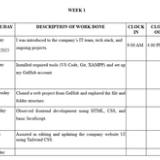
- Keep a daily or weekly logbook
- Submit a final industrial attachment report
Students are treated like part of the workforce, not casual visitors.
Is Industrial Attachment Paid in Ghana?
In most cases, industrial attachment is unpaid.
According to institutional policies:
- Attachment is primarily for learning
- Students should not expect salary or allowance
- Some organizations may voluntarily offer stipends or transport support
Payment is not a requirement for successful completion.
Industrial Attachment Assessment in Ghana
Students are assessed using a combination of:
- Employer or workplace supervisor evaluation
- Academic supervisor assessment
- Industrial attachment report
- Logbook or activity record
Poor performance, absenteeism, or misconduct can lead to:
- Failure of the attachment
- Termination
- Requirement to repeat the programme
What Is an Industrial Attachment Report?
An industrial attachment report is a written document submitted after completing the attachment.
It typically includes:
- Introduction to the organization
- Description of duties performed
- Tools and equipment used
- Skills learned
- Challenges encountered
- Lessons and recommendations
The report shows that the student gained meaningful experience.
Difference Between Industrial Attachment and Internship in Ghana
Many students ask this question.
Industrial Attachment
- Often mandatory
- Tied to academic requirements
- Assessed and graded
- Focused on skill acquisition
Internship
- May be voluntary
- Can be academic or career based
- Sometimes paid
- May not always attract academic credit
In practice, many institutions in Ghana treat both terms as functionally the same, especially in policy documents.
Benefits of Industrial Attachment
For Students
- Real work experience
- Improved confidence
- Career clarity
- Networking opportunities
- Better job readiness
For Institutions
- Stronger industry relationships
- Improved curriculum relevance
- Better graduate outcomes
For Employers
- Access to young talent
- Opportunity to train future employees
- Support for educational development
What Happens If a Student Fails Industrial Attachment?
A student may be required to repeat industrial attachment if:
- Attendance is poor
- Conduct is unprofessional
- The report is inadequate
- The placement is terminated
Failure means the student is considered not to have completed the requirement.
Industrial Attachment vs Apprenticeship
They are not the same.
- Industrial attachment is short term and academic
- Apprenticeship is long term and skill trade focused
Apprenticeship is more common in informal and vocational trades.
Why Industrial Attachment Is Important in Ghana
Ghana’s job market is competitive.
Industrial attachment:
- Reduces the theory practice gap
- Improves graduate employability
- Helps students transition smoothly into full time work
Many employers consider attachment experience during recruitment.
Conclusion
Industrial attachment in Ghana is a critical part of student development.
It equips students with:
- Practical skills
- Workplace exposure
- Professional discipline
Rather than seeing it as a formality, students should approach industrial attachment as a career building opportunity that shapes their future.
FAQs
What does industrial attachment mean?
It means a period of supervised practical training in a real workplace for students.
Is industrial attachment compulsory in Ghana?
Yes, for many TVET, HND, and BTech programmes, and some university courses.
Is attachment the same as internship?
In Ghana, the terms are often used interchangeably, though attachment is usually more academic.
How long is industrial attachment in Ghana?
It typically lasts between 4 and 12 weeks, depending on the institution.
Is industrial attachment paid?
Most industrial attachments are unpaid, though some organizations may offer stipends.
Can a student repeat industrial attachment?
Yes, if the student fails due to poor performance or misconduct.
About the Author
Mohammad-Jamiu B. Balogun, GMNSE
AI Security Researcher · Founder, MonoEd Africa
Mohammad-Jamiu is a First-Class Telecommunications Engineer and Best Graduating Student (BUK), and an AI security researcher. He founded MonoEd Africa to give Nigerian students AI-powered academic tools — from SIWES logbooks to final year projects. His work has reached over 10,000 students across Nigeria.