List of Food Provisions to Take to University in Nigeria: Complete 2026 Checklist for Students
A complete list of food provisions to take to university in Nigeria. Includes long lasting food items, cooking essentials, snacks, proteins and a printable checklist for freshers and returning students.

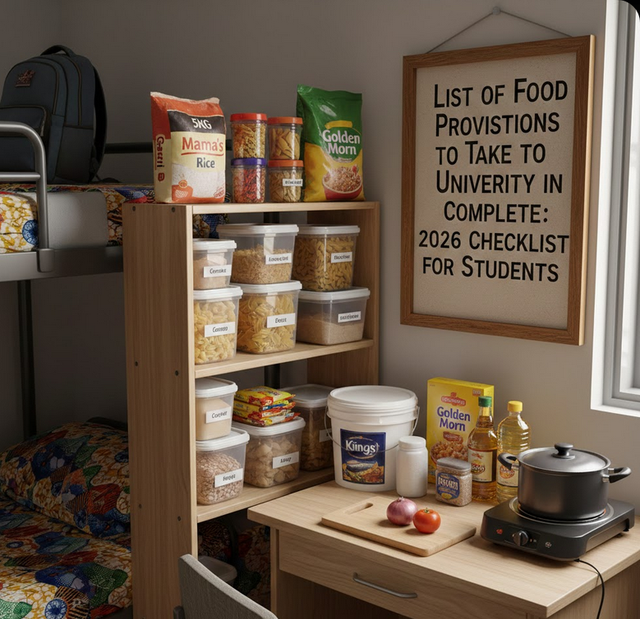
Packing for school can feel overwhelming, especially when you are trying to balance cost, storage space, and daily survival on campus. Food is one of the most important things to plan for because it affects your budget, health, and comfort.
This guide gives a clear, practical and budget friendly list of food provisions to take to university in Nigeria. It covers long lasting staples, cooking essentials, proteins, snacks, quick meal items, and extra tips for hostel life.
Whether you are a fresher or returning student, this checklist removes the guesswork and helps you avoid unnecessary spending.
1. Long Lasting Staples and Core Carbohydrates
These are the base of most Nigerian student meals. They last a long time and can be cooked in many ways.
Rice
Essential for Jollof, Fried Rice, Coconut Rice, and plain white rice with stew. A 5kg or 10kg bag can last weeks if stored in a sealed plastic container to prevent weevils.
Garri
Perfect for soaking or for Eba (Garri Swallow). It’s quite cheap and non-perishable — a must-have emergency staple for every hostel room, unless you don't like it.
Beans
Choose varieties like Oloyin, Drum or Honey Beans because they cook faster and save gas. Great for porridge, akara or moi moi.
Pasta
You can buy different types such as spaghetti, macaroni, penne and even noodles-style pasta. Quick to prepare and suitable for red sauce, white sauce, stir fry or as a side meal.
Flour
All purpose flour and wheat flour are very useful. You can prepare pancakes, buns, chin chin, egg rolls and wheat swallow as a healthier alternative to Eba or Amala.
Swallow Base Ingredients
If you prefer swallow, pack small quantities of any of these:
- Semo
- Amala
- Wheat
- Fufu powder
These store well and can be made quickly with hot water.
Yam and Sweet Potatoes
Good for boiling, frying, roasting or pounding. Buy in small, fresh pieces to avoid spoilage.
Cereals and Oats
Cornflakes, Golden Morn, Quaker Oats and milk powder are ideal for fast breakfast before class.
2. Proteins and Flavor Boosters
Protein rich foods and seasoning items bring life and taste to your meals.
Eggs
Affordable protein source for frying, boiling or mixing into noodles and rice. Buy weekly for freshness.
Crayfish
Improves the flavor of soups, stews, beans, yam porridge and Jollof. Keep in airtight containers.
Dried Fish or Stockfish
Adds deep flavor and richness to soups and sauces. Store properly to avoid insects.
Seasoning Cubes and Salt
Buy in bulk and keep in a dry area. Essential for almost all Nigerian dishes.
Ground Dried Pepper
You can use fine pepper powder or Atagungun depending on your texture preference.
Canned Fish
Sardines, mackerel and tuna are fantastic for quick meals with bread, noodles or pasta.
3. Cooking Oils, Spices and Fresh Essentials
These provide the aroma, color and taste that make Nigerian meals delicious.
Palm Oil and Groundnut Oil
Palm oil is needed for native soups like Egusi, Okra and Banga. Groundnut oil is good for frying plantain, eggs or yams.
Fresh Ingredients
Buy these weekly:
- Onions
- Tomatoes
- Scotch bonnet (ata rodo)
- Fresh pepper
They spoil quickly, so avoid buying in bulk.
Tomato Paste
Tin or sachet tomatoes help you prepare stew, Jollof or pasta sauce easily. Sachets are more budget friendly.
Spices
Pick basic spices such as:
- Curry
- Thyme
- Ginger powder
- Garlic powder
- Mixed spices
- Bay leaves for Jollof
These improve taste and aroma.
Food Storage Containers
Plastic containers help keep food safe, prevent insects and allow you to store meals for the next day.
4. Snacks and Drinks for Busy Days
Snacks help you stay energized when you have back to back lectures or long walks on campus.
- Biscuits and cookies
- Bread bought every two or three days
- Plantain chips
- Groundnuts
- Milk powder, tea bags, and beverages like Milo or Bournvita
- Sugar or honey for quick tea
5. Quick Meal and Emergency Items
These save you when you come back tired or late from class.
- Instant noodles
- Canned items like baked beans or sweet corn
- Oatmeal for quick filling breakfast
- Pancake mix for fast, stress free meals
- Microwave popcorn if your hostel allows it
6. Food Items Better Bought Monthly on Campus
These do not store well for long and are better bought fresh.
- Fresh vegetables like ugu, waterleaf, cabbage, carrot, ewedu
- Fresh protein such as chicken, beef or fish
- Fresh pepper, tomatoes and onions
- Fruits like apples, oranges, bananas and watermelon
7. Practical Tips for Packing Food for University
Start small
You can always buy more later. Overpacking leads to waste.
Consider storage space
Some hostels have shared cupboards, while others have none.
Avoid items that spoil quickly
Unless you have a fridge, stick to long lasting foods.
Label your items
Reduces mix ups in shared kitchens.
Budget weekly
Food is easier to manage with a weekly spending plan.
8. Sample Budget Friendly Food List for Nigerian Students
Use this as a quick start:
- Rice: 5 kg
- Garri: 1 paint bucket
- Beans: 2 to 3 kg
- Spaghetti: 3 to 5 packs
- Noodles: 10 to 15 packs
- Palm oil: 75 cl
- Groundnut oil: 1 liter
- Salt and seasoning cubes
- Sachet tomatoes: 6 to 10
- Pepper, crayfish, dried fish
- Biscuits, tea, sugar, cereal
- Eggs and bread (buy weekly)
👉 Related: What to Take to University as a Fresher in Nigeria (Complete Packing Guide)
9. Other Provision Items You Will Likely Need (Non-Food Essentials)
Food is not the only thing sold in a Nigerian provision store. Pack a few of these alongside your food items so you are not caught unprepared in your first week.
- Bathing soap and body cream
- Toothpaste and toothbrush
- Detergent and washing soap for clothes
- Tissue paper and wipes
- Sanitary pads (for female students)
- Insecticide spray for mosquitoes and roaches
- Extension box and a few bulbs for your room
- Rechargeable lamp or torchlight for power outages
- Small broom, cutlery, plates, and cups
10. Printable Food Provision Checklist (PDF)
Want to tick items off as you pack? Download the printable version of this checklist below and take it with you to the market or the mall.
👉 Download the Food Provisions Checklist PDF
Print it out, or save it on your phone, and check off each item as you buy and pack it. This is also the version to share with a parent or guardian doing the shopping for you.
FAQs
1. How much food should a Nigerian student take to school?
Carry enough dry food for two to four weeks. You can always restock from local markets on campus.
2. Which foods last the longest in the hostel?
Rice, garri, pasta, beans, flour, spices, crayfish, seasoning and powdered beverages.
3. Should I bring perishable foods from home?
Only small quantities if you have proper storage. Otherwise buy perishables weekly.
4. Is it cheaper to buy food at home or on campus?
Bulk items are usually cheaper at home. Perishables are easier and cheaper to maintain when bought on campus.
5. What do I pack if I do not plan to cook?
Foods like bread, cereal, milk, instant noodles, snacks and beverages. You can also rely on campus food vendors.
6. What is a food provision?
A food provision is any food item bought and stored ahead of time for future use, instead of being cooked and eaten immediately. For students, this usually means long lasting staples, proteins, and snacks packed for hostel life.
7. What is the difference between food provisions and other provision items?
Food provisions refer strictly to edible items such as rice, garri, beans, and seasoning. Other provision items refer to non-food essentials commonly sold in the same shops, such as soap, detergent, tissue paper, and toiletries. See the non-food section above for a full list.
About the Author
Mohammad-Jamiu B. Balogun, GMNSE
AI Security Researcher · Founder, MonoEd Africa
Mohammad-Jamiu is a First-Class Telecommunications Engineer and Best Graduating Student (BUK), and an AI security researcher. He founded MonoEd Africa to give Nigerian students AI-powered academic tools — from SIWES logbooks to final year projects. His work has reached over 10,000 students across Nigeria.