How SIWES Is Graded in Nigerian Universities and Polytechnics (Tips for Scoring High)
Learn how SIWES is graded in Nigerian universities and polytechnics. Discover how to score high with tips on logbooks, reports, and defence preparation for a top final grade.


Scoring high in your SIWES (Students Industrial Work Experience Scheme) requires more than just showing up. Understanding how your logbook, report, and defence are graded is essential. Many students who perform well academically still score poorly in SIWES because they underestimate the weight of documentation and preparation.
This guide explains SIWES grading across Nigerian universities and polytechnics, with tips to maximize your score, avoid common pitfalls, and confidently handle your defence.
⚡ SIWES Tools for Students 🔥
Stop struggling with your SIWES documents — use our free AI-powered generators:
📘 SIWES Logbook Generator – Instantly create weekly logbook entries.
📑 SIWES Report Draft Generator – Generate a full SIWES report draft in minutes.
🎓 Trusted by 1,000+ Nigerian students. | Try them now and save hours of work!
Typical SIWES Grading Structure
While exact percentages may vary, most institutions grade SIWES as follows:
| Component | Typical Weight | What Examiners Focus On |
|---|---|---|
| Logbook | 30–40% | Daily/weekly entries, supervisor signatures, sketches, and practical accuracy |
| SIWES Report | 30–40% | Proper structure, technical content, clarity, and completeness |
| Defence (Oral Presentation) | 20–40% | Confidence, accuracy, clarity, and ability to answer questions |
Note: Some schools, like Bayero University Kano (BUK), do not conduct an oral defence. In such cases, your logbook may count for 40–60% and the report about 40%, making documentation the primary factor for your final grade. Always check your school’s guidelines to know how your SIWES grade is calculated.
Filling Your SIWES Logbook Properly
Your logbook is the backbone of your SIWES grade. Supervisors use it to verify attendance, tasks performed, and skills acquired.
Key tips:
- Record daily activities with clear descriptions. Avoid vague entries like “helped in the office.”
- Include technical terms and explanations for tasks.
- Attach drawings or diagrams on A4 sheets if your logbook space is limited. Cut neatly to fit the pages.
- Use a rough draft first, get supervisor feedback, then transfer neatly to the official logbook.
- Ensure all signatures and stamps (from the company and ITF) are included weekly.
For a detailed, step-by-step guide, including examples for different courses and fields, see our Ultimate Guide to SIWES in Nigeria. You can also use the SIWES Logbook Generator to save hours of writing while keeping entries professional and accurate.
Writing a Strong SIWES Report
Your report complements your logbook and carries equal weight in grading.
Recommended structure:
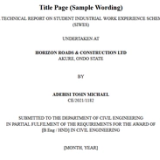
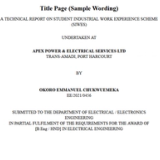
- Title Page – Include your name, department, and period of training.
- Dedication and Acknowledgements – Optional but adds professionalism.
- Abstract – A short summary of your training and achievements.
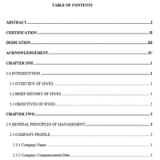
- Table of Contents – For clarity.
- Chapter 1: About SIWES – Purpose, history, and role of ITF.
- Chapter 2: About the Company – Describe the company, your department, and your tasks.
- Chapter 3: Training Activities – Detailed tasks, methods, equipment used.
- Chapter 4: Challenges and Recommendations – Discuss challenges and how they were handled.
- Chapter 5: Conclusion – Lessons learned and advice for future students.
For a full breakdown of chapters, formatting tips, and free tools to simplify report writing, see The Ultimate Guide to SIWES in Nigeria and our Report Draft Generator.
Preparing for Your SIWES Defence
The defence is an oral session where you explain and justify your logbook and report. Tips to excel:
- Know your logbook and report inside out. Be able to explain every task and procedure.
- Summarize your placement: Company name, location, department, duration, and main responsibilities.
- Highlight key skills learned and how they relate to your course.
- Dress professionally – smart corporate attire is ideal.
- Maintain confidence and clarity – speak clearly, avoid reading verbatim from your report.
- Answer only what you know well. Do not guess or exaggerate.
Common Questions and How to Answer Them
Introduction and Placement
Q1. Introduce yourself and your placement.
“My name is [Name], I completed my SIWES at [Company] in [City]. I was in the [Department] for [Duration], performing tasks such as [Key Skills/Activities].”
Q2. Why did you choose this company?
“It offers practical exposure relevant to my course, with experienced staff guiding my development.”
Work Done and Technical Skills
Q3. What were your main duties?
“Daily tasks included [Task 1], observing [Task 2], and assisting in [Task 3]. I also gained competence in [Skill/Equipment].”
Q4. Explain a major task and its steps.
“For [Task Name], I prepared materials, followed SOPs, monitored outcomes, documented results, and adhered to safety procedures.”
Challenges and Reflection
Q5. Challenges faced?
“Limited equipment access, workload, and adapting to new procedures. Managed through observation, guidance, and practice.”
Q6. Recommendations for the company?
“Improve equipment maintenance, provide more training materials, and create more workspace for interns.”
Q7. Was your SIWES training successful?
“Yes, I gained practical skills, confidence, and a deeper understanding of my field.”
Read more on: Complete Guide to SIWES Defence Questions and How to Answer Them
Avoid Common Mistakes
- Not reviewing logbook or report before defence.
- Giving vague or one-word answers.
- Dressing casually.
- Rushing answers or panicking.
- Quoting procedures you don’t fully understand.
Wrap Up
SIWES grading is straightforward if you understand the weight of logbook, report, and defence. Focus on accurate documentation, practice your oral defence, and stay confident.
About the Author
Mohammad-Jamiu B. Balogun, GMNSE
AI Security Researcher · Founder, MonoEd Africa
Mohammad-Jamiu is a First-Class Telecommunications Engineer and Best Graduating Student (BUK), and an AI security researcher. He founded MonoEd Africa to give Nigerian students AI-powered academic tools — from SIWES logbooks to final year projects. His work has reached over 10,000 students across Nigeria.