How I Would Prepare for IELTS Again: A Practical Three-Week Study Plan
I scored IELTS Band 7 after about three weeks of preparation. Here is how I would organise those weeks again, with daily practice and mistake reviews.

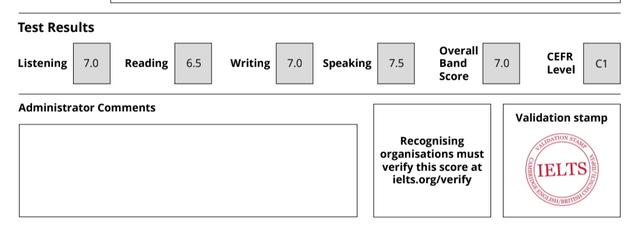
I prepared for IELTS Academic for about three weeks and achieved an overall Band 7.0.
My individual scores were:
- Listening: 7.0
- Reading: 6.5
- Writing: 7.0
- Speaking: 7.5
However, if I had to prepare again, I would change how I used those three weeks.
I would spend less time worrying about every practice score and more time understanding why I lost marks.
I would also organise my practice around specific weaknesses instead of simply trying to complete more tests.
This article explains the study plan I would follow now.
It is a revised approach based on my experience, rather than an exact diary of what I did each day.
Quick Summary: My Three-Week IELTS Study Plan
I would divide the preparation into three stages:
- Week 1: Understand the format and identify weaknesses.
- Week 2: Practise specific skills and review mistakes.
- Week 3: Practise under timed conditions and prepare for test day.
Each study session would include time for reviewing previous work.
Three weeks is not enough for everyone. This plan is most suitable for someone who already has a reasonable foundation in English and needs focused IELTS preparation.
If your current performance is far below your target, give yourself more time.
💡 You may like to read: How I Scored Band 7.0 in IELTS Academic in Nigeria After 3 Weeks of Preparation
Before You Start: Know What Score You Need
Before choosing practice materials, check the requirements of the university, organisation, or application you are preparing for.
Write down:
- Whether you need IELTS Academic or General Training.
- Your required overall band.
- Any minimum score required in each section.
- Your available preparation time.
An overall target does not tell the whole story.
For example, if you need at least Band 7 in every section, a strong Speaking score will not compensate for a Reading score below that requirement.
This plan focuses on IELTS Academic because that is the test I took.
Week 1: Understand the Test and Find Your Weak Areas
Day 1: Take a Diagnostic Test
Start with a practice test from an official IELTS preparation source.
Use the timing instructions and avoid pausing whenever a question becomes difficult.
The purpose is to understand your starting point.
Afterward, record what happened in each section.
Did you lose concentration in Listening?
Did you run out of time in Reading?
Did you struggle to develop ideas in Writing?
Did you give very short Speaking answers?
For Writing and Speaking, remember that your own impression is not a dependable band score. Get feedback where possible.
Days 2 and 3: Review Listening and Reading Mistakes
Do not stop after checking the answer key.
For Listening, return to the relevant part of the recording and use the transcript if one is available.
Ask:
- Did I miss the words?
- Did I misunderstand the meaning?
- Did I hear the answer but spell it incorrectly?
- Did I overlook an instruction?
For Reading, find the evidence supporting each correct answer.
If you chose incorrectly, explain why your answer did not fit.
Reading was my weakest section, so I would give this review particular attention.
Days 4 and 5: Review Writing and Record Speaking Practice
Write a Task 1 response and a Task 2 essay, then review them separately.
For Task 1, check whether you selected the main features and supported them with relevant details.
For Task 2, check whether you answered the question and developed your ideas.
For Speaking, record yourself answering practice questions aloud.
Listen for places where your answer becomes difficult to follow, ends too quickly, or relies on the same phrases repeatedly.
Days 6 and 7: Choose Your Priorities
By the end of the first week, identify two or three problems that deserve the most attention.
For example:
- I spend too long searching for Reading answers.
- My Task 2 paragraphs repeat ideas instead of explaining them.
- I struggle to extend Speaking answers.
These observations should shape the next week.
“Improve my English” is too broad to guide a daily study session.
“Explain each Task 2 main idea with a relevant example” gives you something practical to work on.
Week 2: Practise the Skills Behind Your Mistakes
This is the week when I would focus on smaller exercises.
You do not always need a complete test to practise a specific weakness.
Days 8 and 9: Target Listening and Reading Problems
If spelling caused Listening errors, review the words you missed and practise recognising them in context.
If you lost your place in the recording, practise a short section while paying attention to how the conversation moves between questions.
For Reading, work on the question types that caused the most difficulty.
Explain the evidence for your answers before checking the key.
Once you understand the task better, repeat similar exercises with a timer.
Days 10 and 11: Revise Your Writing
I would spend these sessions improving work I had already written.
Choose a weak paragraph and rewrite it.
Then compare both versions:
- Is the main point clearer?
- Is the explanation more specific?
- Does the example support the argument?
- Have I corrected the mistakes I identified?
For Task 1, try writing a clearer overview or grouping the supporting details more logically.
For Task 2, practise planning a response before writing the full essay.
Get Feedback on Your Task 2 Practice
Since taking IELTS, I’ve built MyBandPrep to help candidates practise their Task 2 writing.
You can write or paste an essay, receive an estimated band score across the four marking criteria, and identify sentences to improve before checking a revision.
Practise and review your IELTS Task 2 essay with MyBandPrep
The scores are AI-generated practice estimates, not official IELTS results. Use the feedback alongside official materials, and check that suggested changes preserve your meaning.
Day 12: Develop Your Speaking Answers
Practise responding to questions you have not prepared in advance.
Give your answer, explain why, and add a relevant detail where it helps.
Avoid forcing every response into the same pattern.
If you get stuck, practise expressing the idea with words you already know rather than stopping to search for impressive vocabulary.
Days 13 and 14: Check Your Progress
Return to the priorities you selected in Week 1.
Can you now explain your ideas more clearly?
Are you locating Reading evidence faster?
Are the same Listening mistakes appearing less often?
Use fresh questions to check whether the improvement transfers beyond material you have already practised.
Week 3: Bring the Skills Together
Days 15 and 16: Practise Complete Sections
Move from short exercises to complete sections under timed conditions.
Follow the instructions for the materials you are using.
For Writing, practise completing both tasks within the available time, including planning and checking.
For computer-based preparation, type your responses so that writing on a screen becomes familiar.
Day 17: Review Your Remaining Problems
Look at the errors that still appear.
Choose a manageable number to address.
If you repeatedly leave Task 2 unfinished, examine where your time goes.
If a Reading question takes too long, practise moving on and returning to it.
At this stage, I would prioritise changes I can understand and apply consistently.
Day 18: Do a Test Rehearsal
Rehearse Listening, Reading, and Writing using the sequence and timing instructions provided with your official practice materials.
Keep your phone away and avoid unnecessary interruptions.
Practise Speaking separately with another person or by recording your responses.
The goal is to experience sustained concentration and notice practical problems before test day.
Day 19: Review the Rehearsal
Give the rehearsal a proper review.
Separate knowledge problems from timing or attention problems.
For each important mistake, write one action you can take.
For example:
“I missed the answer because I was still thinking about the previous question. I need to move on sooner.”
Days 20 and 21: Prepare and Keep Practice Light
Use the final days for short reviews and familiar exercises.
Check your test booking, identification requirements, travel arrangements, and instructions from your test centre.
I would avoid filling the final evening with several unfamiliar practice tests.
The aim would be to arrive prepared and rested.
💡 You may like to read: My IELTS Computer Based Test Experience in Nigeria: What Really Happens on Exam Day
How I Would Organise a Daily Study Session
For a day with about two hours available, I would try:
- 15 minutes: review previous mistakes.
- 45 minutes: practise the main skill for that day.
- 30 minutes: check answers or revise writing.
- 20 minutes: practise a second skill.
- 10 minutes: record what to work on next.
This is a suggested routine, not an IELTS requirement.
Adjust it around your work, studies, and concentration. Keep some review time even when your session needs to be shorter.
What I Would Stop Doing
I would stop treating every practice score as a prediction of my final result.
During preparation, I frequently scored around 6.0 or 6.5 in mocks. My eventual overall result was Band 7.0.
That does not mean everyone will score higher in the real exam.
It means a practice score needs interpretation.
I would ask what caused the result and whether the same weakness kept appearing.
💡 You may also like to read: Why My IELTS Mock Scores Were Lower Than My Real Exam Score
Conclusion
If I prepared for IELTS again, I would give each week a clear purpose.
First, understand my starting point.
Then, work on specific weaknesses.
Finally, practise bringing those skills together under time pressure.
Three weeks worked for my situation. Your preparation may need to be longer.
Choose your timeline based on your current performance and target requirements, then make each practice session teach you something useful.
FAQs
Can I prepare for IELTS in three weeks?
It is possible for some candidates, particularly those who already have a suitable English foundation and are close to their target. Others need longer. Start with a diagnostic test and use feedback to assess your preparation needs.
How many hours should I study each day?
There is no single number that suits everyone. This plan includes an example two-hour routine, but you should adjust it to your starting level, schedule, and weaknesses. Include time to review your work.
Should I take a full IELTS mock test every day?
I would not make daily full tests the centre of this plan. Use complete tests to assess timing and performance, then use shorter exercises to address the problems they reveal.
Can I use this plan for IELTS General Training?
You can adapt the overall approach, but use materials for your test type. In particular, replace Academic Task 1 chart practice with General Training letter practice.
What if I am still below my target after three weeks?
Review which sections remain below your requirements and consider allowing more preparation time if your circumstances permit. Completing a schedule does not automatically mean you are ready for the required score.
About the Author
Mohammad-Jamiu B. Balogun, GMNSE
AI Security Researcher · Founder, MonoEd Africa
Mohammad-Jamiu is a First-Class Telecommunications Engineer and Best Graduating Student, BUK '24, and an AI security researcher. He founded MonoEd Africa to give Nigerian students AI-powered academic tools — from SIWES logbooks to final year projects. His work has reached over 10,000 students across Nigeria.