30 Biochemistry Project Topics and Ideas for Nigerian Students
30 biochemistry project topics for Nigerian students, from plant extracts and antioxidants to nutrition and toxicology, with tips on lab work and choosing a topic.

Most Nigerian biochemistry projects follow a familiar path: take a local plant or food, extract it, screen it for compounds, then test its effect in the lab or in experimental animals. It is a well-worn path because it works. The plants are cheap, the methods are standard, and panels understand the design.
The real limits are equipment and money. A spectrophotometer, reagent kits for liver or kidney function tests, and animals with feed all cost something. Before you settle on a topic, talk to your supervisor and lab technologist about what is realistic.
Here are 30 ideas grouped by area.
Treat these as a starting point for a talk with your supervisor. Animal studies usually need ethical approval.
What makes a good biochemistry topic
- A local material. A medicinal plant, fruit, vegetable, spice or processed food.
- Standard assays. Phytochemical screening, antioxidant assays, enzyme activity, liver or kidney function tests.
- A clear comparison. Treated against control groups, or different doses or extracts.
- Affordable reagents. Price your kits before you commit.
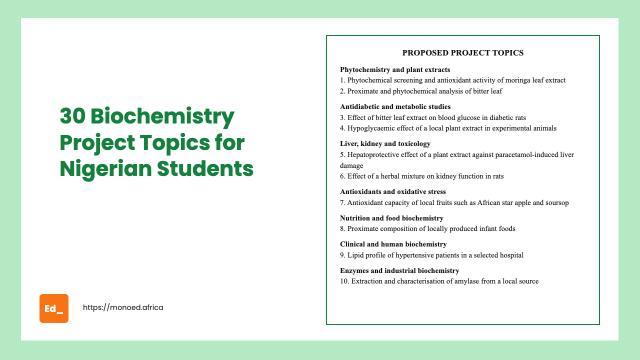
30 biochemistry project topics
Phytochemistry and plant extracts
- Phytochemical screening and antioxidant activity of moringa leaf extract
- Proximate and phytochemical analysis of bitter leaf
- Phytochemical composition of locally used herbal mixtures (agbo)
- Comparison of aqueous and ethanol extracts of a medicinal plant
- Vitamin and mineral content of common Nigerian vegetables
Antidiabetic and metabolic studies
- Effect of bitter leaf extract on blood glucose in diabetic rats
- Hypoglycaemic effect of a local plant extract in experimental animals
- Effect of a plant extract on lipid profile in rats fed a high-fat diet
- Anti-obesity potential of a local plant extract
Liver, kidney and toxicology
- Hepatoprotective effect of a plant extract against paracetamol-induced liver damage
- Effect of a herbal mixture on kidney function in rats
- Acute and sub-acute toxicity of a commonly used herbal remedy
- Effect of alcohol consumption on liver enzymes in rats
- Heavy metal content of vegetables grown near a dumpsite
Antioxidants and oxidative stress
- Antioxidant capacity of local fruits such as African star apple and soursop
- Effect of a plant extract on oxidative stress markers in rats
- Free radical scavenging activity of spices used in Nigerian cooking
Nutrition and food biochemistry
- Proximate composition of locally produced infant foods
- Effect of processing on the nutrient content of cassava products
- Nutritional value of edible insects consumed in Nigeria
- Vitamin C content of fruit juices sold in a selected city
- Effect of cooking methods on the nutrient content of beans
Clinical and human biochemistry
- Lipid profile of hypertensive patients in a selected hospital
- Blood glucose levels of undergraduates and their dietary habits
- Serum electrolyte levels in patients with kidney disease
- Haemoglobin levels of pregnant women attending antenatal clinic
Enzymes and industrial biochemistry
- Extraction and characterisation of amylase from a local source
- Activity of enzymes in germinating grains used for brewing
- Production of biodiesel from local seed oils
- Effect of temperature and pH on the activity of a plant enzyme
Choosing a biochemistry topic you can finish
Check the equipment. Confirm the spectrophotometer, centrifuge, rotary evaporator and any kits you need are available and working.
Plan animal work carefully. Animal studies need housing, feed, ethical approval and several weeks. If time is short, choose an in vitro or food analysis topic instead.
Identify your plant properly. Have a botanist authenticate your plant and record the voucher number. Panels often ask.
Budget early. Reagent kits can be expensive. Ask seniors and your technologist where to buy them.
More help: how to choose a final year project topic.
Writing your biochemistry project
Chapter Three should describe plant collection and identification, extraction, animal grouping and treatment, and each assay in enough detail to repeat. Chapter Four presents results as mean values with standard deviation, compared using statistical tests such as ANOVA.
Your SIWES lab experience can point you to a practical topic. See the biochemistry SIWES report guide.
Frequently Asked Questions
What are easy biochemistry project topics?
Phytochemical screening, proximate analysis and vitamin content of local plants or foods are quicker and cheaper than animal studies.
Do I need ethical approval for animal studies?
Usually yes. Most universities require approval from an animal ethics committee before you start.
Which statistical test is used in biochemistry projects?
ANOVA with a post hoc test is common for comparing groups. A t-test works for two groups.
Which plants are popular for biochemistry projects?
Moringa, bitter leaf, scent leaf, garlic, ginger, African star apple and many traditional herbs are common because they are cheap and widely used.
How many chapters does a biochemistry project have?
Most use five: introduction, literature review, materials and methods, results, and discussion with conclusion.
About the Author
Mohammad-Jamiu B. Balogun, GMNSE
Founder & Product Architect, MonoEd Africa
Mohammad-Jamiu is a First-Class Telecommunications Engineer and Best Graduating Student of Bayero University, Kano (Class of 2024), and the founder of MonoEd Africa. An AI engineer and product architect, he designs and builds MonoEd's guided workflows for SIWES logbooks and reports, final year projects and academic tools such as the GPA calculator, helping students produce better work and build the skills the AI era demands. MonoEd's tools have reached more than 20,000 students across Nigeria.