How to Prepare for IELTS at Home in Nigeria Without Coaching Classes
Preparing for IELTS at home in Nigeria? Learn how to choose resources, organise practice, review mistakes, and get feedback without coaching classes.

Can you prepare for IELTS at home without attending coaching classes?
Yes, you can.
However, preparing independently requires more than downloading practice questions and watching videos whenever you have time.
You need a routine, suitable materials, and a way to understand your mistakes.
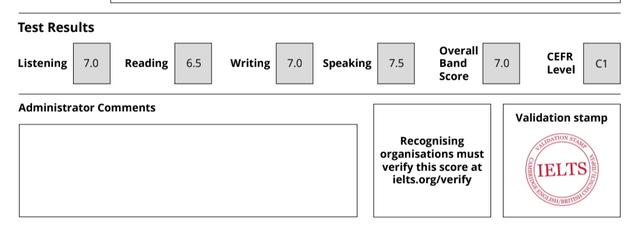
When I prepared for IELTS Academic, I used official practice materials, including IELTS Ready Premium. After about three weeks of preparation, I achieved an overall Band 7.0.
My scores were:
- Listening: 7.0
- Reading: 6.5
- Writing: 7.0
- Speaking: 7.5
That experience taught me how important it is to understand the test and identify your weak areas.
This guide explains how I would organise preparation at home, including what to practise independently and when outside feedback could help.
Quick Summary: How to Study for IELTS at Home
Start with these steps:
- Confirm which IELTS test and scores you need.
- Learn the test format using official resources.
- Take a diagnostic practice test.
- Build a realistic study routine.
- Practise all four skills.
- Review your mistakes after each session.
- Get feedback on Writing and Speaking where possible.
- Practise under timed conditions before test day.
You do not need to collect every resource you find.
Choose a small set of useful materials and work through them carefully.
1. Confirm Your Test Type and Required Scores
Before starting, check the requirements of the organisation receiving your result.
Write down:
- The IELTS test type you need.
- Your required overall band.
- Any minimum score required in each section.
- Your application deadline.
- How much preparation time you have.
Do not assume that someone else’s requirements apply to you.
Also, avoid planning only around the overall band. If your application requires a minimum Writing score, that section needs enough attention even when your other skills are stronger.
I took IELTS Academic, so the examples in this article mainly reflect that experience.
2. Start With Official Preparation Resources
When studying alone, you need materials you can trust.
Begin with the preparation sections on the official IELTS website.
Use official sample questions to understand what the tasks look like. Read the instructions carefully before trying to answer.
During my preparation, I used IELTS Ready Premium. Whatever resources you choose, check their current access conditions directly with the provider.
Videos and independent guides can help explain difficult topics, but compare advice with official guidance when someone presents a technique as a compulsory rule.
Be particularly careful with promises of guaranteed scores or one template that supposedly works for every question.
3. Find Your Starting Point
Before creating a detailed study plan, complete a practice test or a set of diagnostic exercises.
Use the timing instructions and avoid checking answers while you work.
Then look beyond the final score.
For Listening and Reading, record the questions you missed and investigate why.
For Writing and Speaking, identify the parts you found difficult and seek feedback where possible.
Your notes might look like this:
- Listening: I lose my place after missing one answer.
- Reading: I spend too long on difficult questions.
- Writing: I have ideas but struggle to explain them.
- Speaking: My answers become very short when the topic is unfamiliar.
These observations give you practical starting points.
💡 You may like to read: Why My IELTS Mock Scores Were Lower Than My Real Exam Score
4. Create a Routine That Fits Your Situation
Studying at home can be convenient, but it also makes postponing practice easy.
Choose study periods you can realistically protect.
If you work or attend school, a focused evening session may be easier to maintain than an ambitious schedule you rarely follow.
For example, you could organise your week like this:
| Day | Main focus |
|---|---|
| Monday | Listening practice and transcript review |
| Tuesday | Reading practice and answer analysis |
| Wednesday | Task 2 writing and revision |
| Thursday | Speaking practice and recording review |
| Friday | Academic Task 1 or General Training letter practice |
| Saturday | Timed practice covering your priorities |
| Sunday | Review, catch up, or rest |
This is an example, not a fixed requirement.
Give more time to weaker sections while keeping the others active.
If electricity or internet access is unreliable where you study, prepare ahead. Save materials for offline use where the provider allows it, charge your device, and keep a notebook available.
5. Practise Listening Actively
Listening to English can help you become more comfortable with the language, but your IELTS preparation should also include test questions.
After completing a Listening exercise:
- Check the answers.
- Return to the parts you missed.
- Read the transcript if one is available.
- Identify what prevented you from answering correctly.
- Listen again.
Perhaps you understood the conversation but missed a change of date.
Perhaps you heard the answer but wrote the wrong spelling.
Those are different problems and need different practice.
For computer-based preparation, also practise entering answers while listening so that typing does not become an unfamiliar task on exam day.
6. Review Reading Answers With Evidence
Reading was my most difficult section.
My main challenge was finding information quickly enough under time pressure.
When reviewing a passage, locate the words or sentences that support the correct answer.
Then ask:
“Why did my answer seem right?”
You may discover that you relied on a familiar keyword without checking the surrounding meaning.
Keep track of the question types that repeatedly cause difficulty. Practise those separately, then return to timed passages.
Simply reading the answer key will not show you how to make a better decision next time.
7. Give Writing Its Own Feedback Process
Writing can be difficult to assess alone.
You may know what you intended to say, which makes it easier to overlook unclear explanations or missing connections.
After finishing a response, check:
- Did I answer the actual question?
- Is my position clear where required?
- Does each paragraph have a purpose?
- Have I explained my ideas?
- Are my examples relevant?
- What grammar mistakes keep appearing?
For Academic Task 1, review whether you selected the main features and supported them with relevant details.
For General Training Task 1, practise letters using materials for that test.
Get Feedback on Your Task 2 Essays
Since taking IELTS, I’ve built MyBandPrep to help candidates practise Task 2 writing and identify what to improve.
You can write or paste an essay, receive an estimated band score across the four marking criteria, and review specific sentences before revising your work.
Practise IELTS Writing at home with MyBandPrep
The scores are AI-generated practice estimates, not official IELTS results. Check each suggestion against your intended meaning, and use official materials alongside the feedback.
💡 You may also like to read: How to Score Band 7+ in IELTS Writing
8. Practise Speaking Out Loud
Thinking about an answer is different from saying it.
Use practice questions and answer aloud, even when you are studying alone.
Record a few responses on your phone, then listen back.
Ask yourself:
- Did I answer the question?
- Could someone follow my explanation?
- Where did I hesitate because I could not express an idea?
- Did I repeat the same words or phrases unnecessarily?
You can also practise with a friend who is willing to ask questions and listen.
They do not need to assign you a band score to notice that an answer is difficult to follow.
For more detailed assessment, consider feedback from a qualified IELTS teacher.
Avoid memorising complete responses. Practise expressing ideas in different ways so that you can respond to the question you actually receive.
9. Keep a Simple Mistake Log
A notebook or basic document is enough.
Use three columns:
| Mistake | Why it happened | What I will practise |
|---|---|---|
| Missed a Listening answer | Kept thinking about the previous question | Moving on when I lose an answer |
| Weak Task 2 paragraph | Repeated my claim without explaining it | Adding a specific explanation and example |
| Reading took too long | Stayed on one difficult question | Moving on and returning later |
Review this log before your next session.
You do not need to record every small mistake. Focus on patterns that affect your performance repeatedly.
10. Practise Under Timed Conditions
Untimed practice helps you understand a task.
Timed practice helps you find out whether you can complete it within the available time.
Use both.
As your test approaches, rehearse complete sections using the timing and instructions provided with official materials.
If you are taking the computer-based test, practise reading on screen and typing your writing responses.
Familiarity helped me feel more comfortable when I entered the actual test room.
💡 You may like to read: My IELTS Computer Based Test Experience in Nigeria
When Would Coaching or Extra Help Be Useful?
Independent preparation does not mean you must solve every problem alone.
Outside help may be useful if:
- You cannot understand why the same mistakes keep appearing.
- Your Writing or Speaking feedback is unclear or inconsistent.
- You struggle to organise your preparation.
- Your performance remains below your required scores.
- You need someone to explain a specific skill.
You could seek a focused feedback session rather than immediately committing to a full course.
The useful question is:
“What help would address the problem I currently have?”
Conclusion
Preparing for IELTS at home is a practical option when you have suitable materials, a manageable routine, and a way to review your work.
Start by understanding your requirements and current performance.
Then practise, investigate mistakes, and adjust your next session.
If you need extra feedback, make it part of your preparation. Studying independently can still include getting help at the points where it matters.
FAQs
Can I prepare for IELTS at home without coaching?
Yes. You can organise your own preparation using official resources, regular practice, and careful review. You may still benefit from outside feedback, particularly for Writing and Speaking.
How long does IELTS preparation take?
It depends on your current English level, required scores, study time, and familiarity with the test. My preparation lasted about three weeks, but that timeline will not suit everyone.
Can I prepare using only my phone?
A phone can support activities such as listening practice, reading explanations, and recording Speaking responses. If you are taking the computer-based test, also arrange opportunities to practise with a computer and keyboard.
How can I practise IELTS Speaking without a partner?
Answer practice questions aloud and record yourself. Listen for clarity, relevance, and places where you struggle to express ideas. Add conversations with another person or teacher feedback when available.
How can I get feedback on IELTS Writing at home?
Options include a qualified teacher, a study partner, and an AI writing tool such as MyBandPrep. A study partner can comment on clarity, while detailed assessment requires more expertise. Treat AI band scores as practice estimates.
Do I need expensive materials to start preparing?
Start by exploring the official preparation resources and sample questions available to you. Identify what support you are missing before paying for additional materials or lessons.
About the Author
Mohammad-Jamiu B. Balogun, GMNSE
AI Security Researcher · Founder, MonoEd Africa
Mohammad-Jamiu is a First-Class Telecommunications Engineer and Best Graduating Student, BUK '24, and an AI security researcher. He founded MonoEd Africa to give Nigerian students AI-powered academic tools — from SIWES logbooks to final year projects. His work has reached over 10,000 students across Nigeria.