Nigeria Current Affairs 2026 | Updated for JAMB, WAEC, NECO & Exams
Nigeria current affairs 2026 explained clearly for students. Updated leadership, states and governors, national symbols, history, and recent developments for exams.

Complete and Updated Guide for Nigerian Students
Nigeria current affairs form a core part of academic learning and general awareness for students across the country. From secondary school examinations to university entrance tests and government recruitment exercises, candidates are expected to understand Nigeria’s political structure, leadership, national symbols, and recent developments.
This article provides a comprehensive and carefully organized Nigeria current affairs guide for 2026, designed to help students study confidently, revise quickly, and answer objective and theory questions accurately.
📙 Final Year Project Tools For Students 🔥
FYP Report Generator — Generate full project chapters and citations.
https://fyp.monoed.africa
Project Topic Generator — Get supervisor-ready project topics instantly.
https://topics.monoed.africa
Reference Verifier — Quickly verify citations by checking authors, year, and DOI before submission.
https://refverify.monoed.africa
What Are Nigeria Current Affairs?
Nigeria current affairs refer to recent and relevant facts about Nigeria covering:
- Government and political leadership
- National institutions
- States, capitals, and governors
- National symbols and civic knowledge
- Major national and economic developments
These facts change over time due to elections, appointments, reforms, and policy decisions, which is why students must rely on updated materials.
System of Government in Nigeria
Nigeria operates a federal system of government, which means power is shared between:
- The federal government
- State governments
- Local governments
The federal government is divided into three arms:
- Executive
- Legislature
- Judiciary
Each arm has defined responsibilities under the 1999 Constitution.
The Executive Arm of Government (2026)
The executive arm is responsible for implementing laws and managing national administration.
Key Federal Executive Leaders
- President of Nigeria: Bola Ahmed Tinubu
- Vice President: Kashim Shettima
- Secretary to the Government of the Federation: George Akume
- Chief of Staff to the President: Femi Gbajabiamila
- National Security Adviser: Nuhu Ribadu
- Chief Justice of Nigeria: Kudirat Kekere Ekun
- Governor of the Central Bank of Nigeria: Olayemi Cardoso
Role of the President
The president:
- Serves as head of state and government
- Appoints ministers and key officials
- Commands the armed forces
- Signs bills into law
These functions are frequently tested in government and civic education exams.
CV/Resume Maker
Create and download a professional, ATS-friendly CV or resume in minutes.
Fill the Form
Provide your details in an easy-to-use, clean interface.
Get AI Suggestions
Refine your inputs for crucial sections like achievements and objectives.
Download Your CV/Resume
Instantly receive a professional, ATS-friendly PDF document.
The Legislative Arm of Government
The legislative arm is known as the National Assembly, responsible for making laws.
Structure of the National Assembly
Senate
- Senate President: Godswill Akpabio
- Deputy Senate President: Barau Jibrin
House of Representatives
- Speaker: Tajudeen Abbas
- Deputy Speaker: Benjamin Kalu
Functions of the Legislature
- Law making
- Budget approval
- Oversight of the executive
- Representation of citizens
The Judiciary in Nigeria
The judiciary interprets laws and ensures justice.
Highest Courts in Nigeria
- Supreme Court
- Court of Appeal
- Federal High Court
- State High Courts
Chief Justice of Nigeria
- Kudirat Kekere Ekun
Judicial independence is a key principle tested in civic education and government examinations.
Ministerial Structure in Nigeria
Ministries handle specialized areas of governance. Students are often tested on the functions of ministries rather than names alone.
Key ministries include:
- Finance and Coordinating Ministry of the Economy
- Education
- Health and Social Welfare
- Defence
- Interior
- Works
- Power
- Petroleum Resources
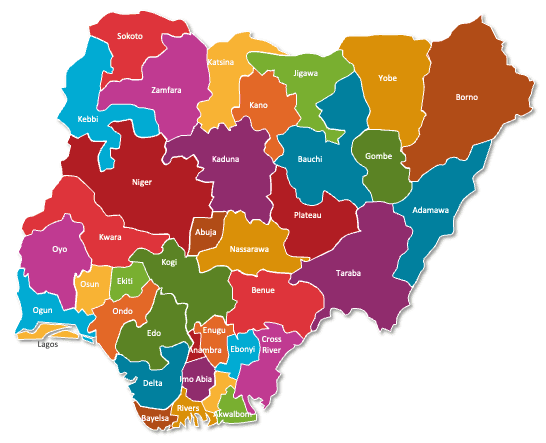
The 36 States of Nigeria and Their Capitals (2026)
Nigeria consists of 36 states and the Federal Capital Territory.
| State | Capital | Governor |
|---|---|---|
| Abia | Umuahia | Alex Otti |
| Adamawa | Yola | Ahmadu Fintiri |
| Akwa Ibom | Uyo | Umo Eno |
| Anambra | Awka | Chukwuma Soludo |
| Bauchi | Bauchi | Bala Mohammed |
| Bayelsa | Yenagoa | Douye Diri |
| Benue | Makurdi | Hyacinth Alia |
| Borno | Maiduguri | Babagana Zulum |
| Cross River | Calabar | Bassey Otu |
| Delta | Asaba | Sheriff Oborevwori |
| Ebonyi | Abakaliki | Francis Nwifuru |
| Edo | Benin City | Monday Okpebholo |
| Ekiti | Ado Ekiti | Biodun Oyebanji |
| Enugu | Enugu | Peter Mbah |
| Gombe | Gombe | Inuwa Yahaya |
| Imo | Owerri | Hope Uzodinma |
| Jigawa | Dutse | Umar Namadi |
| Kaduna | Kaduna | Uba Sani |
| Kano | Kano | Abba Kabir Yusuf |
| Katsina | Katsina | Dikko Radda |
| Kebbi | Birnin Kebbi | Nasir Idris |
| Kogi | Lokoja | Ahmed Ododo |
| Kwara | Ilorin | AbdulRahman AbdulRazaq |
| Lagos | Ikeja | Babajide Sanwo Olu |
| Nasarawa | Lafia | Abdullahi Sule |
| Niger | Minna | Umar Bago |
| Ogun | Abeokuta | Dapo Abiodun |
| Ondo | Akure | Lucky Aiyedatiwa |
| Osun | Osogbo | Ademola Adeleke |
| Oyo | Ibadan | Seyi Makinde |
| Plateau | Jos | Caleb Mutfwang |
| Rivers | Port Harcourt | Siminalayi Fubara |
| Sokoto | Sokoto | Ahmed Aliyu |
| Taraba | Jalingo | Agbu Kefas |
| Yobe | Damaturu | Mai Mala Buni |
| Zamfara | Gusau | Dauda Lawal |
| FCT | Abuja | Administered by FCT Minister (Nyesom Wike) |
Security and Defence Structure in Nigeria
Security leadership is relevant for current affairs and recruitment exams.
Key positions include:
- Chief of Defence Staff
- Chief of Army Staff
- Chief of Naval Staff
- Chief of Air Staff
- Inspector General of Police
The armed forces protect Nigeria’s sovereignty and maintain internal security.
National Symbols of Nigeria
National Flag
- Designed by Michael Taiwo Akinkunmi
- Green symbolizes agriculture and natural wealth
- White symbolizes peace
Coat of Arms
- Eagle represents strength
- Horses represent dignity
- Black shield represents fertile soil
- Silver Y represents Rivers Niger and Benue
National Anthem
- Nigeria reverted to the former national anthem in 2024
Democracy Day
- Celebrated on June 12
Important Historical Facts About Nigeria
These facts appear frequently in objective questions.
- Amalgamation of Northern and Southern Protectorates: 1914
- Independence: October 1, 1960
- Republic status: 1963
- First Prime Minister: Abubakar Tafawa Balewa
- First President: Nnamdi Azikiwe
- First Military Head of State: Aguiyi Ironsi
- Oldest University: University of Ibadan
- Largest State by land mass: Niger State
- Highest Mountain: Chappal Waddi
👉 You can also read on: How the 36 States Got Their Names in Nigeria (Full Historical Breakdown)
Recent Nigeria Developments (2025 to 2026)
Students should note major national changes, including:
- Economic reforms and fiscal restructuring
- Growth of the Nigerian capital market
- Education curriculum updates
- Energy sector developments
- Local government autonomy reforms
These topics may appear in comprehension passages or essay questions.
Quick Revision Section for Students
- Nigeria operates a federal system
- There are 36 states and one FCT
- President heads the executive arm
- National Assembly makes laws
- Democracy Day is June 12
- Capital of Nigeria is Abuja
Likely Nigeria Current Affairs Exam Questions (With Answers)
Objective Questions
1. Who is the current President of Nigeria?
A. Muhammadu Buhari
B. Bola Ahmed Tinubu
C. Goodluck Jonathan
D. Olusegun Obasanjo
Answer: B
2. How many states are in Nigeria?
A. 30
B. 35
C. 36
D. 37
Answer: C
3. Which city is the capital of Nigeria?
A. Lagos
B. Ibadan
C. Abuja
D. Minna
Answer: C
4. Democracy Day in Nigeria is celebrated on
A. May 29
B. October 1
C. June 12
D. July 1
Answer: C
5. The Nigerian National Assembly consists of
A. Senate only
B. House of Representatives only
C. Senate and House of Representatives
D. State Assemblies
Answer: C
Theory Questions
1. Explain the functions of the executive arm of government in Nigeria.
Answer: The executive implements laws, formulates policies, manages national administration, appoints officials, and oversees security and foreign relations.
2. State three national symbols of Nigeria and their meanings.
Answer:
- Flag: Green for agriculture, white for peace
- Coat of Arms: Strength, dignity, fertile land
- Anthem: National unity and patriotism
Why Students Should Study Nigeria Current Affairs
Studying current affairs:
- Improves exam performance
- Builds civic awareness
- Helps in interviews and aptitude tests
- Encourages responsible citizenship
Conclusion
Nigeria current affairs are not just examination topics but essential knowledge for understanding the country’s governance and national identity. With consistent study and regular updates, students can stay informed and confident in any assessment.
This 2026 guide is structured to serve as a trusted reference point for students, teachers, and exam candidates across Nigeria.
⚡ SIWES Tools for Students 🔥
Use our free AI-powered tools to make SIWES easier.
SIWES Report Generator — Generate a formatted SIWES report instantly.
https://report.monoed.africa
SIWES Logbook Generator — Create weekly logbook entries in seconds.
https://logbook.monoed.africa
SIWES / IT Placement Finder — Find verified SIWES & IT placement opportunities.
https://siwesfinder.monoed.africa
📙 Final Year Project Tools 🔥
FYP Report Generator — Generate full project chapters and citations.
https://fyp.monoed.africa
Project Topic Generator — Get supervisor-ready project topics instantly.
https://topics.monoed.africa
Reference Verifier — Quickly verify citations by checking authors, year, and DOI before submission.
https://refverify.monoed.africa
FAQs on Nigeria Current Affairs (2026)
What are Nigeria current affairs?
Nigeria current affairs are updated facts about the country’s government, political leadership, national institutions, history, and recent developments that students are expected to know for examinations and general knowledge.
Why are Nigeria current affairs important for students?
They help students perform better in exams such as JAMB, WAEC, NECO, Post UTME, and civil service tests, while also improving civic awareness and understanding of national issues.
Who is the current President of Nigeria in 2026?
The President of Nigeria is Bola Ahmed Tinubu, while the Vice President is Kashim Shettima.
How many states are in Nigeria?
Nigeria has 36 states and one Federal Capital Territory, Abuja.
What is the capital city of Nigeria?
The capital city of Nigeria is Abuja, located in the Federal Capital Territory.
Who is the Chief Justice of Nigeria in 2026?
The Chief Justice of Nigeria is Kudirat Kekere Ekun.
What is Nigeria’s system of government?
Nigeria operates a federal system of government with three arms: executive, legislature, and judiciary.
What are the arms of government in Nigeria?
The three arms of government are the executive, legislative, and judicial arms.
What is Nigeria Democracy Day?
Nigeria Democracy Day is celebrated on June 12 every year to commemorate the 1993 presidential election.
What is the Nigerian National Assembly?
The National Assembly is Nigeria’s law making body, made up of the Senate and the House of Representatives.
How often should Nigeria current affairs be updated?
Nigeria current affairs should be updated regularly, especially after elections, cabinet reshuffles, new appointments, or major policy changes.
Is this Nigeria current affairs guide suitable for JAMB and WAEC?
Yes. The content is structured to align with JAMB, WAEC, NECO, Post UTME, and other competitive examinations in Nigeria.
What are examples of national symbols of Nigeria?
Examples include the national flag, coat of arms, national anthem, and Democracy Day.
Who designed the Nigerian flag?
The Nigerian flag was designed by Michael Taiwo Akinkunmi in 1959.
What is the largest state in Nigeria by land area?
Niger State is the largest state in Nigeria by land mass.
What is the oldest university in Nigeria?
The University of Ibadan, founded in 1948, is the oldest university in Nigeria.
Where can students use Nigeria current affairs knowledge?
Students can use current affairs knowledge in school exams, entrance exams, scholarship tests, interviews, and general aptitude assessments.