SIWES Report for Estate Management Students: Structure, Tasks and Sample
How to write your SIWES report as an Estate Management student, covering valuation, property management and agency work.
Estate Management students usually train with estate surveyors and valuers, real estate firms, property managers, banks and land offices. You might inspect a building on Monday and draft a valuation report on Thursday.
A strong report shows the process behind each job. Here's how to organise it. Follow your department's format first, and see the Estate Management logbook guide for the daily entries.
What makes an Estate Management report different
- Describe the property, the purpose and the method. For example: "residential property, valuation for mortgage, investment method".
- Mention documents carefully. Name types (such as tenancy agreement or survey plan) but do not include real clients' private details.
- Show the steps in a valuation or inspection. Supervisors want the process, not only the result.
- Be careful with figures. Use only numbers you were given or calculated, and keep client information private.
- Link to your courses, such as valuation, property management, land law and building construction.
Where Estate Management students usually train
- Estate surveying and valuation firms
- Real estate agencies and developers
- Property management companies
- Banks and mortgage institutions
- State land and survey offices
- Facility management companies
- Housing corporations
Use the SIWES Finder to look for placements that suit your course.
Tasks you can write about
Valuation
- Site visits and property inspection
- Taking measurements and notes of building condition
- Collecting comparable sales and rent data
- Applying valuation methods (comparison, investment, cost) with supervision
- Helping to prepare valuation reports
Property management
- Rent collection and tenant records
- Handling tenant complaints and maintenance requests
- Preparing tenancy agreements and notices (with supervision)
- Service charge and budget records
- Inspecting properties for repairs
Agency and sales
- Marketing properties and preparing adverts
- Accompanying clients on inspections
- Negotiation support and record keeping
- Following up documentation
Land and facility matters
- Visiting sites and checking land documents
- Boundary and survey plan checks
- Facility management and maintenance schedules
Office support
- Filing, report typing and client communication
- Market surveys and property listings
Chapter by chapter
Chapter One: Introduction
Background of SIWES, aims and objectives, and scope. Keep it short. See how to write SIWES Chapter One.
Chapter Two: Profile of the organisation
History, services, structure, departments and an organogram. Mark your unit. See the organogram guide.
Chapter Three: Work done
Group by activity. For example:
- Orientation and office routine
- Property inspection and measurement
- Valuation work
- Property management tasks
- Documentation and client service
Example (fictional, for style only):
In the third week, I followed the senior valuer to inspect a three-bedroom flat for a mortgage valuation. I helped to measure the rooms with a measuring tape, noted the condition of the roof, walls and plumbing, and took photographs for the file. Back at the office, I collected rents of three similar flats in the area as comparable evidence. The valuer used these figures to estimate the rental value, and I helped to type the draft report. I learned that careful inspection and good comparable data are the base of a reliable valuation.
Chapter Four: Equipment and tools used
Explain each item in three or four sentences. Examples:
- Measuring tape, laser distance meter, measuring wheel
- Camera or phone camera for site records
- Compass and GPS (for site location)
- Computer, printer and scanner
- Microsoft Word and Excel for reports and calculations
- Property listing platforms and databases
- Tenancy and valuation forms and templates
Chapter Five: Summary, problems and recommendations
Summarise your training, name real problems (limited access to some sites, incomplete records, transport difficulties) and how you handled them, then give a conclusion and recommendations.
See the SIWES technical report format guide for the general layout.
Common mistakes
- Writing "I learned about valuation" without saying what you did.
- Including private client details.
- Listing tools without explaining them.
- Mixing up Chapter Two and Three.
- Copying a classmate's report.
Getting a first draft
If you have your tasks but struggle to turn them into chapters, the MonoEd SIWES Report Generator can write a first draft in your school's format from a short description of what you did. You can read Chapters One and Two free before you decide to unlock the rest.
The SIWES Logbook helps with your weekly entries.
Frequently Asked Questions (FAQs)
What should an Estate Management SIWES report contain?
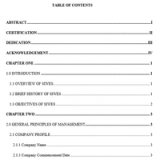
A cover page, certification, acknowledgement, abstract or overview, table of contents, and chapters on introduction, company profile, work done, equipment used, and summary with recommendations. Check whether your school uses four or five chapters.
How do I write about valuation if I only observed?
Be honest. Say what you observed, what you helped with (measuring, collecting data, typing) and what you learned. Supervisors prefer honesty to exaggeration.
Can I include real client names?
No. Use general terms such as "a residential property in the city" and keep client details private.
What if my firm did mostly agency work?
Write about listing, marketing, inspections, client meetings and documentation, and connect them to your courses.
Where can I see a related example?
The Quantity Surveying SIWES report and the SIWES technical report format show similar structure.
About the Author
Mohammad-Jamiu B. Balogun, GMNSE
AI Security Researcher · Founder, MonoEd Africa
Mohammad-Jamiu is a First-Class Telecommunications Engineer and Best Graduating Student, BUK '24, and an AI security researcher. He founded MonoEd Africa to give Nigerian students AI-powered academic tools — from SIWES logbooks to final year projects. His work has reached over 10,000 students across Nigeria.