SIWES Report for Quantity Surveying Students: Structure, Tasks and Sample
Quantity Surveying SIWES report: how to write about taking off, bills of quantities and site visits, with a short sample paragraph.


Quantity Surveying students usually train with consulting QS firms, contractors, developers and works departments. Much of the work is documents and calculations, so many students write reports that sound too general.
Here's how to make yours specific. Follow your department's format first, and see the Quantity Surveying logbook guide for the daily entries.
What makes a Quantity Surveying report different
- Name the documents. Bill of quantities (BoQ), schedule of rates, interim certificate, variation order, final account.
- Show the method. Taking off from drawings, abstracting, billing, and pricing.
- Mention the standard method of measurement you used, if you know it (for example SMM or a local standard used by your firm).
- Use real figures carefully. Do not include confidential client or tender prices.
- Link site and office. Say how site measurements connected to your valuation or account.
Where QS students usually train
- Consulting quantity surveying firms
- Building and civil contractors
- Property developers
- Government ministries (works and housing)
- Banks and project monitoring units
- Project management companies
Use the SIWES Finder to look for companies that suit your course.
Tasks you can write about
Pre-contract
- Reading architectural, structural and services drawings
- Taking off quantities (excavation, concrete, blockwork, finishes)
- Abstracting and billing
- Preparing bills of quantities and tender documents
- Pricing with schedules of rates
- Preparing cost estimates and cash-flow forecasts
Post-contract
- Site visits and measurement of work done
- Preparing interim valuations and payment certificates
- Valuing variations
- Keeping site records and daily reports
- Helping to prepare final accounts
Office
- Using Excel or QS software for measurement and pricing
- Filing contract documents
- Attending site or client meetings (as a note-taker or observer)
Chapter by chapter
Chapter One: Introduction
Background of SIWES, aims and objectives, and scope. Keep it short. See how to write SIWES Chapter One.
Chapter Two: Profile of the organisation
History, services, structure, projects and an organogram. Mark your unit. See the organogram guide.
Chapter Three: Work done
Group by activity. For example:
- Orientation and reading drawings
- Taking off and abstracting
- Bills of quantities and pricing
- Site visits and measurement
- Valuations and records
Example (fictional, for style only):
During the fourth week, I was given the foundation and ground floor drawings of a two-storey building and asked to take off the quantities of concrete and reinforcement. I measured lengths and dimensions from the drawings with a scale rule, entered the dimensions in a take-off sheet, and calculated volumes. My supervisor checked my sheet and corrected two wrong dimensions. I then abstracted the figures into a bill of quantities page in Excel. I learned that small errors in measurement can change the cost of a project, so every dimension must be checked.
Chapter Four: Equipment and tools used
Explain each item in three or four sentences. Examples:
- Scale rule and measuring tape
- Calculator and take-off sheets
- Drawings (architectural, structural, services)
- Microsoft Excel and Word
- QS software, if the firm used any
- Site measuring tools (tape, measuring wheel, level)
- Printer, scanner and plotter
Chapter Five: Summary, problems and recommendations
Summarise your training, name real problems (unclear drawings, tight deadlines, limited site access) and how you handled them, then give a conclusion and recommendations.
See the SIWES technical report format guide for the general layout.
Common mistakes
- Writing "I learned about BoQ" without showing what you did.
- Leaving out the documents and methods.
- Including confidential tender prices.
- Listing tools without explaining them.
- Copying a classmate's report.
A draft to start from
Got the tasks but not the chapters? The MonoEd SIWES Report Generator turns a short account of your training into a first draft in your school's format. The early chapters are free to read before you pay for the rest.
For the weekly entries, the SIWES Logbook can help.
Frequently Asked Questions (FAQs)
What should a Quantity Surveying SIWES report contain?
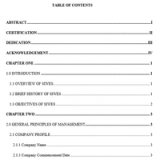
A cover page, certification, acknowledgement, abstract or overview, table of contents, and chapters on introduction, company profile, work done, equipment used, and summary with recommendations. Check whether your school uses four or five chapters.
Can I include a sample bill of quantities?
A short, simple example you made is fine. Don't include real client or tender prices without permission.
What if I was mostly on site?
Write about measuring work done, checking quantities, site records and meetings, and link them to the valuations and accounts you saw.
What if I only did office work?
Write about taking off, abstracting, billing, pricing and filing in detail, and mention any site visits you joined.
How is it different from an Estate Management report?
QS reports focus on measurement, costing and contracts. See the Estate Management SIWES report for comparison.
About the Author
Mohammad-Jamiu B. Balogun, GMNSE
AI Security Researcher · Founder, MonoEd Africa
Mohammad-Jamiu is a First-Class Telecommunications Engineer and Best Graduating Student, BUK '24, and an AI security researcher. He founded MonoEd Africa to give Nigerian students AI-powered academic tools — from SIWES logbooks to final year projects. His work has reached over 10,000 students across Nigeria.